
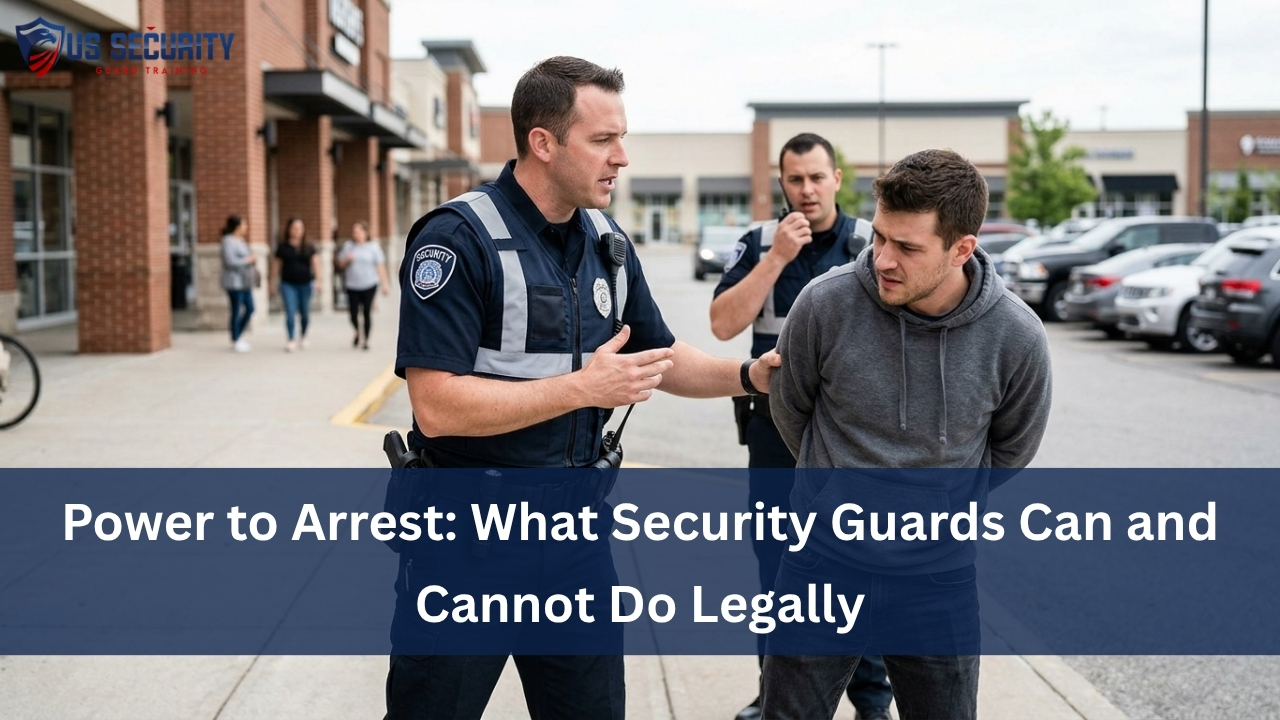
Security guards are seen by many people on a regular basis but few realize the extent of their legal authority. It’s a key bit of information that California property owners and businesses rely upon to know the extent of security guard authority. This clarity will keep public members and those who are providing security services daily safe. This guide clarifies the scope of security guards’ authority and the boundaries they must adhere to in California in 2026. In California, security guards have certain and strictly limited powers at all times.
How Security Guards Differ From Police Officers Legally
Police has the power to enforce all laws throughout their jurisdiction and they get their power from the state. Security guards, on the other hand, have their powers derived from private property rights and other California laws.
The Role of Private Property in Guard Authority
Private property is the number one determining factor to what a security guard can legally do while on duty. On private land, guards impose any conditions and/or rules the property owner establishes as conditions of entry. In addition, they may enforce those conditions directly on the owner’s behalf by evicting anyone who is in breach of those conditions.
Remove Trespassers From Private Property
Security guards are not simply restricted to removing people who are on their property but trespassing on it. If a person does not leave after asking them to comply the guard may summon police and enforce trespass laws. As such, guards are the first responders to the enforcement of property access rules and all conditions of entry.
Use Reasonable Force When Legally Justified
Security guards in California are allowed to use reasonable force to defend themselves or others against actual harm. Reasonable Force – only the amount of force reasonably required to deal with the threat faced. A guard cannot use undue force just because a situation has become tense or confrontational verbally.
Carry Weapons With Proper Licensing
In California, it is legal for armed security guards to carry weapons and other approved weapons while they are on duty. This does give them to obtain a separate Firearms Qualification Card from the Bureau of Security and Investigative Services directly. Moreover, guards must undergo certain approved training and receive separate endorsements if they are handling batons, pepper spray or tasers. No guard should be carrying any weapon without the proper licensing that California law provides for that particular type of weapon.
What Security Guards CANNOT Legally Do in California
They Cannot Arrest for Misdemeanors Not Witnessed
Security guards should not make arrests for a misdemeanor they haven’t personally seen. Guards cannot act on the reports, other persons’ descriptions or the security footage of past misdemeanour activity.
They Cannot Conduct Unlawful Searches
The body, clothing and belongings of a person may not be searched by a security guard without notice and without the clear and voluntary consent of the person. They do not have the legal power to force any search as law enforcement does in the case of warrants and certain legal circumstances. Moreover, an individual who gave their consent to search as a venue entry condition may rescind that consent at a later time.
They Cannot Impersonate Police Officers
In California, it’s illegal to work as a security guard and pretend you are a police officer. This means wearing badges, uniforms or equipment which reasonably could deceive the public as to the official role of the wearer.
They Cannot Use Excessive or Unreasonable Force
Security guards that strike, choke or injure another person to the point of causing injury beyond the actual need of the situation are subject to very serious criminal assault charges. Clearly, professional training is the best solution to prevent or stop guards from violating this crucial and consequential line of law day after day.
They Cannot Detain Someone Indefinitely
A security guard may not lawfully detain any person for an unreasonable period even in the exercise of shopkeeper’s privilege. In most cases, courts in California consider a reasonable detention to be just a few minutes. Under California law, it is illegal to detain another person for an unreasonable amount of time.California law clearly provides that it’s false imprisonment to keep someone for an unreasonable length of time.
The Reasonable Force Standard in California
California indicates reasonable force as what a reasonable person would think is necessary in that exact same situation. Guards should judge the case on its own merits and use only the force that is necessary to deal with the issue safely. Thus, the force level that is acceptable in one circumstance can be totally illegal in another completely different circumstance. In this regard, judgment, training and real experience are prerequisites for anyone to be able to do what this standard requires — and that qualification and licensing is essential.
Legal Risks When Security Guards Exceed Their Authority
Stopping security guards from going over their lawful limits has far reaching repercussions beyond the impact on any single guard. The repercussions of unrighteous guards’ actions can be serious, causing both property owners and security companies to potentially incur substantial legal liability and financial damage. Thus, it is a quality assurance and legal safeguard to hire a professionally licensed and adequately trained security staff. These are the particular legal dangers that could happen if the guards go beyond their granted authority, in any part of California.
Employer Liability and Licensing Consequences
Security companies have a legal duty to the actions of every officer. They are placed at client locations throughout California. If a guard is acting unlawfully, it leaves a company open to civil suits. It also opens to BSIS disciplinary action and loss of operating license. This means professional companies provide extensive training and defined procedures. It’s important for clients to always check if their security company has good security measures.
How Professional Companies Protect Clients Legally
Security companies with a good reputation regularly update their staff and actively oversee all of their officers. They also have sufficient liability insurance coverage. It will safeguard clients in case one of the officers makes a costly legal mistake when providing services. Therefore, clients that recruit properly licensed and trained companies are facing much less legal risk. The right security partner is a physical security investment and a valuable legal security strategy for your business operations.
Conclusion
When applied properly and professionally by trained officers, citizen’s arrest rights, reasonable force, trespasser removal and shopkeeper’s privilege are legitimate. But when the police unlawfully detain you, use excessive force or pretend to be officers of the law. Sharp Guard Group is a reputable Los Angeles security firm whose staff and officers work with complete legal compliance. The key to selecting the right security partner is selecting a team that will protect you.