
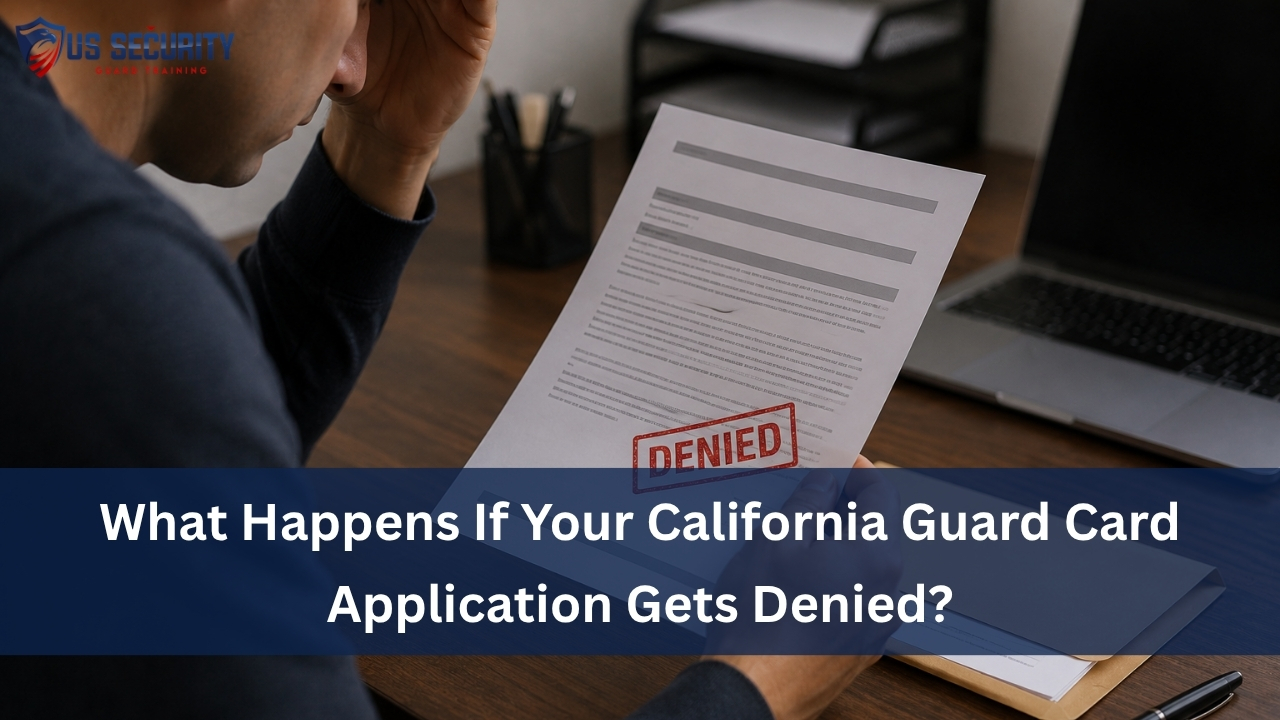
It can be overwhelming and stressful to be notified that a Guard Card application is denied in California. But when you get denied, it’s not the end of your entire security career path. This guide provides you with an understanding as to why BSIS has rejected your application and what will happen thereafter. You’ll discover the typical reasons for denials, what you can do to appeal them, and the realistic timeframes for each. You will clearly and with confidence know the options you have by the end.
Why BSIS Denies Guard Card Applications
BSIS takes the time to examine each application thoroughly before deciding to approve or deny it. There are multiple reasons why an application may be rejected for the entire year.
Criminal History and Disqualifying Convictions
Some criminal convictions are immediately disqualifications for being a guard. Specifically, BSIS is closely watching offenses that are closely related to the duties of a security guard. This concern can be directly sparked by violent or theft or fraud crimes. But for every single applicant disqualification, there must be a single conviction. BSIS will take a case-by-case approach, taking into account the rehabilitation evidence and the time that has passed.
Incomplete or Inaccurate Applications
But, even something minor on the application can cause major delays or denial. The absence of signatures, dates, or complete sections immediately draw attention to the fact. Also, it can cause some serious credibility issues when you don’t reveal your full criminal past. In the end, the Live Scan background check will show up any undisclosed criminal history the individual may have. It is important to be honest in all aspects of the application throughout the process for final approval from BSIS.
Non-Approved Training Providers
Any training that happens outside of the approved providers cannot meet any of the requirements for a BSIS. The only certificates accepted for application requirements are from a BSIS licensed training facility. Training offered from a non-approved provider may automatically be denied. Before starting any necessary coursework, verify with your provider whether or not they are approved.
What BSIS Sends You After a Denial
If an application is turned down, the applicant is provided with a formal written notice that informs them of all the reasons. This notice generally comes in the form of a Statement of Issues. It has clearly stated the reason for your specific application denial. Reading this document in its entirety is your first step in any possible appeal.
Reading Your Denial Notice Carefully
Your notice will identify what petition you were denied on and will outline the reason for that denial. It also contains some key dates for appeals made in writing. Also, the notice provides information about supporting documentation that you need to submit to support your case. You can use this notice to help you plan in an appropriate way.
Your Right to Appeal a Denial
All applicants have the right to appeal a BSIS denial decision. This appeal process goes through a Disciplinary Review Committee, or “DRC,” in California. It is important that the applicant knows how this works in order to be able to react promptly and adequately on the event of any denial.
Filing Your Appeal Within the Deadline
Appeals must be filed within 30 days after the date of the notice of denial. This must be done in writing, by mail, email or fax. This is an important deadline that you will not appreciate if you miss.Losing this important deadline will greatly restrict your options moving forward. As such, it is critical overall to respond promptly following receipt of your denial notice.
What the Disciplinary Review Committee Can Do
Your case is carefully reviewed by the DRC and any evidence you submit to support your case is also carefully considered. They have the ability to confirm, revoke or completely change the initial refusal decision that was made. Rehabilitation proof, character references, and extensive court records can serve as supporting evidence. Putting together a solid and well-organized set of evidence increases your odds of success in this review process.
Request for Administrative Hearing
If the DRC subsequently denies your claim, there are still further options that are real. A formal administrative hearing is available for a person to appeal the decision in person. This hearing is an opportunity to submit further evidence in support of your particular case. This process will take many times longer but provides another significant opportunity for approval.
Preparing for Your Administrative Hearing
When requesting a formal administrative hearing after any denial, preparation is key. Unfortunately, if this deadline is missed, the hearing automatically may be denied.
The Role of Rehabilitation Evidence
Rehabilitation evidence is truly significant in the entire appeal process. There is no automatic denial due to a single prior conviction under California law. In particular, a Certificate of Rehabilitation can have significant weight to bolster the appeal case. This certificate is a sign of progress from your initial conviction, which took place years ago.
How to Obtain a Certificate of Rehabilitation
Having legal counsel get involved makes the entire process and eligibility easy to understand. Unlike the other certificates, this is not automatic and must be apart from a separate court petition. Beginning this process early will make sure that the documentation is received well in advance of your appeal date.
The Difference Between Denial and Suspension
A denied application is another common area of confusion for applicants — they may think it is a card suspension. If you are denied, it is before you receive your first guard card from BSIS at all. Instead, things work like this: Suspension occurs when an active card is temporarily suspended. This distinction is important so that you can find out the right process to follow for your case. The procedures, timelines and documentation required are different for each situation, in general.
How a Denial Affects Your Employment Search
If you are denied, pending or final, it can make your job search much more complicated. It is important to have an active guard card before being offered any particular position by most employers.
Correcting Common Application Problems
The majority of denials are not permanent and not “unfixable” disqualifications by themselves. If you know what your problem is, you can solve it straight-forward and effectively.
- The submission of missing, but previously omitted, documents.
- Certification of rehabilitation programs or counseling completed
- Correcting inaccurate information first entered in your application form
- If you are looking for character references from employers or community members, do so.If someone is looking for character references from employers or community members, they’re likely to get them.
How Long the Appeal Process Typically Takes
Appeals usually take longer to process depending on the complexity of the case and the volume of cases that are being appealed. Appeals of criminal histories typically take a longer time to resolve than simple corrections of paperwork. Overall, administrative hearings take much longer than informal requests for DRC. Patience is still a key thing, as haste will not necessarily help the case.
What Happens If Your Appeal Fails
If you eventually lose your appeal, you can still possibly appeal later. Waiting periods vary by the reason for your initial denial application. If you can fix the root of the problem and reapplying the product will greatly increase the chances of getting approval. Talking to a knowledgeable training provider can help you understand what the next feasible steps are for you.
Avoiding a Guard Card Application Denied California Situation Entirely
Include all criminal records, including expunged or sealed ones. A suitable training provider that has been approved by the Bureau of Safety and Insurance also helps to avoid subsequent certification issues. When you take the time to properly configure your application in advance, your risk for being denied later is greatly diminished.
Common Mistakes Applicants Make After Denial
Some applicants make unnecessary mistakes which further compounds their problems after any denial. One of the most expensive mistakes in general is missing the deadline for submission of the appeal.
- Not reading the denial notice carefully
- Failing to file an appeal within the time limits set by the Department of Housing and Urban Development (HUD)
- Does not provide supporting evidence in appeals that is complete or organized
- Showering daily without dealing with the root cause of the problem
Working With an Attorney During Your Appeal
Certain candidates select an attorney for a more complicated denial scenario in particular. An experienced lawyer is well versed in administrative law and BSIS appeal procedures. This guidance can be of particular value in severe criminal history situations generally. Many simple denials of paperwork, though, don’t necessarily need formal legal representation. Consider the relative complexity of your case to make decisions about legal assistance.
Learning From a Denial to Strengthen Future Applications
Being denied can be a good lesson for people applying in the future, in general. Knowing exactly what went wrong will help you to not make the same mistakes later. The second time around, creating a more comprehensive application means better results. Often, meaningfully better overall long term results can be achieved through persistence and careful correction.
Why US Training Guard Recommends Professional Guidance
Here at US Training Guard, we feel that with the right guidance you can have the best outcome. It is important to take a careful and informed look at a Guard Card application denied by California decision. All applicants are urged to seek advice prior to making any formal appeal.
FAQs
What if I miss the appeal date?
You have a lot less room for manoeuvre and sometimes need a whole new application.
May I reapply if my application was refused?
Yes but definitely it helps a lot if you solve the original problem.
Will a Certificate of Rehabilitation assist my cause?
Yes, it is sign of meaningful progress and adds to your overall appeal case.
Conclusion
When the Guard Card application was denied, California did not know it, which is discouraging but not the end of the world. When you know your reason for denial, you will be ready to respond effectively and plan in a clear way quickly. Overall it is still possible to draw the attention of the courts through the DRC or by requesting a hearing.
Evidence and organized documentation of rehabilitation further enhances the overall appeal case. At the US Training Guard, we can assist applicants in this process with confidence. The best outcome of the benefits you will reap depends on your preparation today.